Specialized Plumbing Services
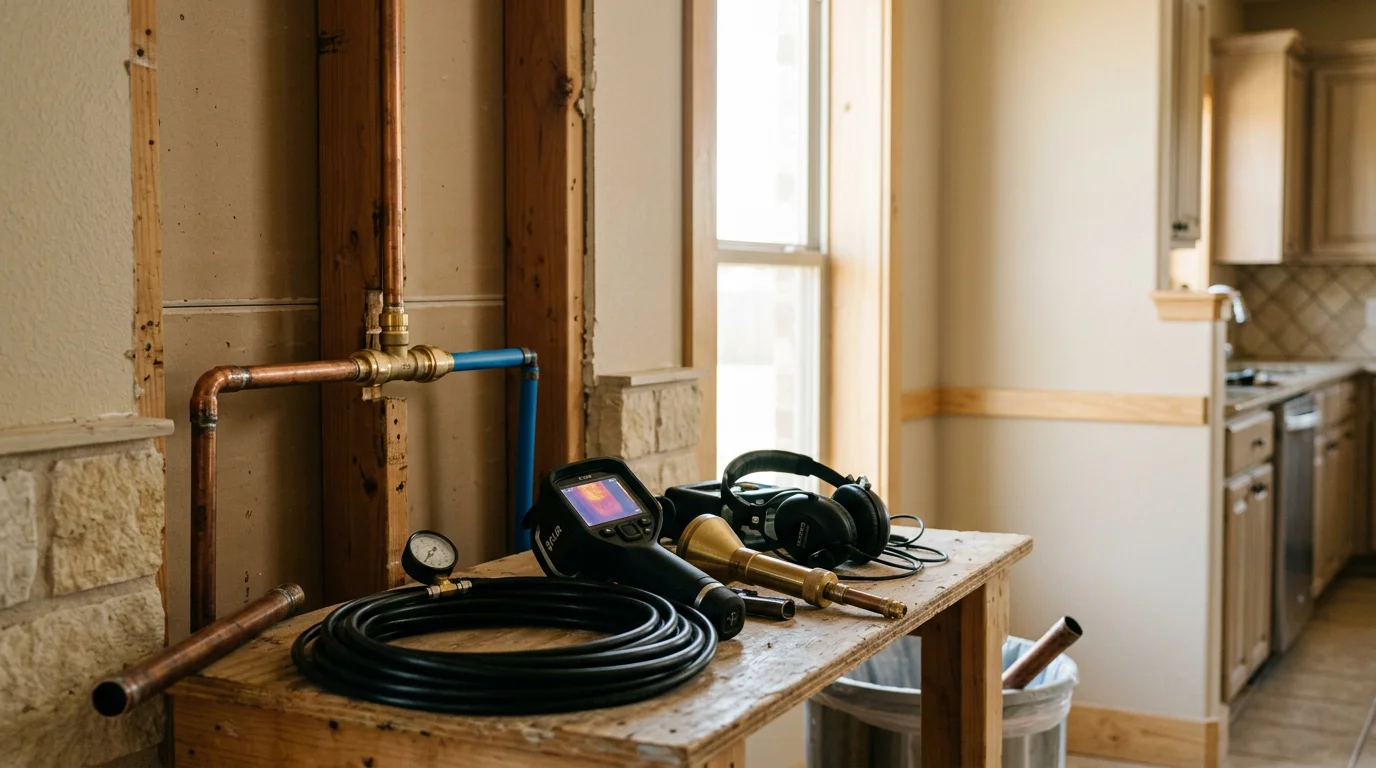
Advanced leak detection and utility line locating services — acoustic, thermal, and tracer-gas diagnostics for homes and businesses across North Texas.
Explore Specialized Plumbing Services
Flower Mound sits between Lake Lewisville and Grapevine Lake in northwest Denton County, where the Cross Timbers terrain creates varied elevation and drainage conditions across the town. The housing stock is largely built from the 1990s onward, with established neighborhoods like Bridlewood — built primarily between 1996 and 2004 — now reaching the 20-to-30-year mark where slab plumbing failures become more frequent. The Navo clay loam soil that underlies Flower Mound's neighborhoods is documented to have an argillic horizon running 35 to 55 percent clay content, and it expands and contracts dramatically with moisture changes. Mature trees in established neighborhoods along FM 1171, Gerault Road, and in Bridlewood and Wellington send roots into aging sewer lines, compounding the drain issues that clay soil movement already creates.
Flower Mound, TX
TX Service Area
Communities we serve
Flower Mound, TX
Plumber
The Navo clay loam soil beneath Flower Mound's neighborhoods is among the most reactive in Denton County, with a clay-enriched layer that runs 35 to 55 percent clay content. During summer drought, that soil shrinks and pulls away from foundations, creating voids around under-slab pipes. When heavy rain arrives, it swells with force, shifting the slab and stressing the pipes embedded in it. Bridlewood homes built between 1996 and 2004 have been through 20 to 30 of these annual cycles, and the cumulative stress on copper supply lines shows up as friction leaks at joints and elbows that are invisible without acoustic detection equipment.
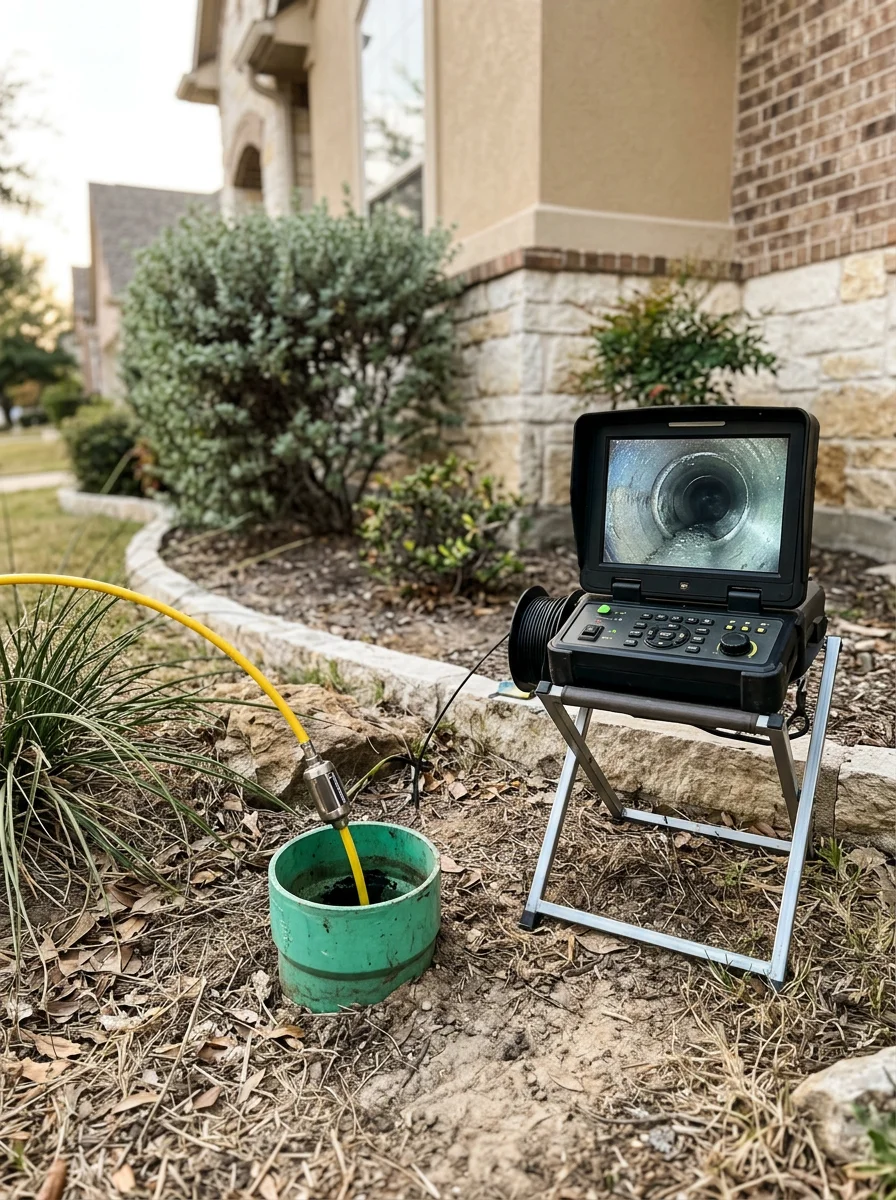
Flower Mound's hilly Cross Timbers terrain means that drainage and elevation vary significantly across the town. Properties near Grapevine Lake in the 75022 ZIP code sit on wetter ground than those in the denser eastern sections, and that moisture difference affects how aggressively the clay soil moves beneath each slab. Homes near the lake with large lots and mature tree plantings face a compounded risk: clay soil movement plus root intrusion into sewer lines from trees that have been growing for 25 or more years. A sewer camera inspection is the only way to see both problems at once.
In Flower Mound's established neighborhoods along FM 1171 and Gerault Road, foundation-related water damage from slab leaks is a documented pattern. The feedback loop works like this: a slab leak adds moisture to the clay soil, the wet soil swells and shifts the foundation further, and that additional movement stresses more pipes. Stopping the leak early — before it saturates the soil — is the most effective way to limit both the plumbing repair and the downstream foundation consequences. Our multi-method detection approach finds the source without guessing.
At a glance
Leak detection is the defining service need in Flower Mound because the Navo clay soil beneath every slab in the city moves with enough force to crack supply lines and separate drain joints in homes that are only 20 years old. We use acoustic technology, thermal imaging, and pressure testing to locate hidden leaks beneath Bridlewood and Wellington slabs without unnecessary demolition. Sewer camera inspections address the root intrusion and pipe belly that develop in established neighborhoods where mature trees have been growing toward sewer lines for decades. Drain repairs and pipe repairs follow from those inspections, targeting the specific failure rather than a broad replacement.
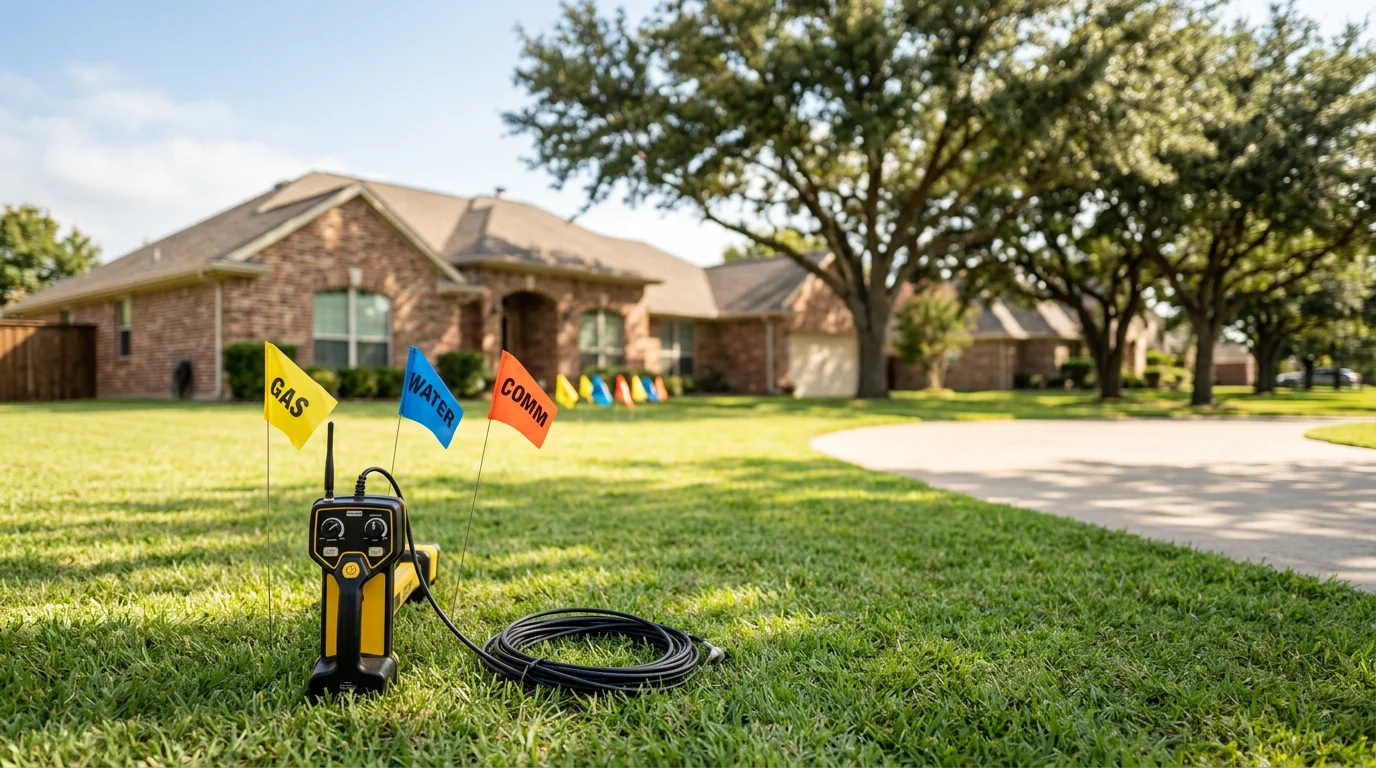
Advanced leak detection and utility line locating services — acoustic, thermal, and tracer-gas diagnostics for homes and businesses across North Texas.
Expert plumbing repair, installation, and diagnostic services for homes and businesses across the area.
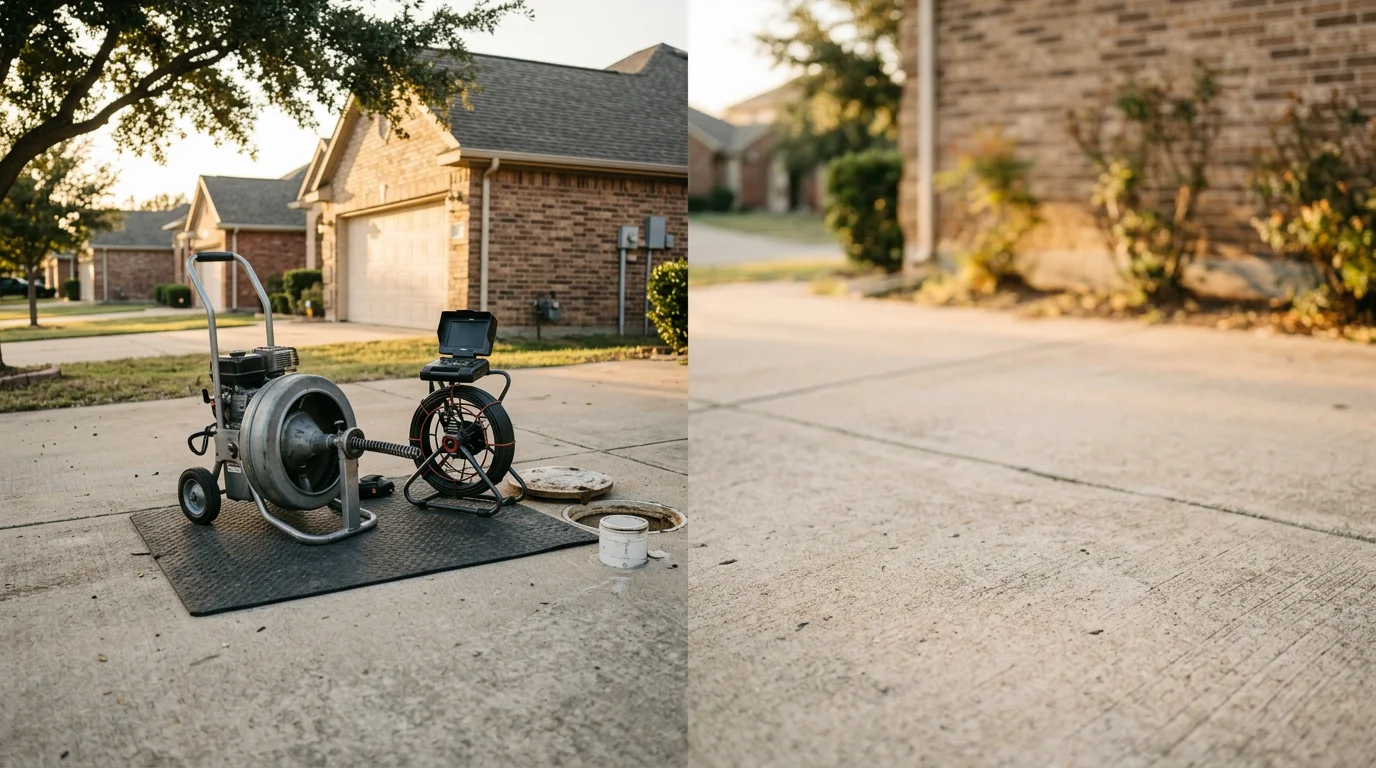
Professional drain cleaning, repair, and inspection services using advanced camera technology.
Worked with us?
Leave a ReviewServing Flower Mound, TX
Our crew knows Flower Mound, TX. We will show up on time, assess the job honestly, and give you a clear written number before asking you to decide anything.
Also serving across North Texas:
Common questions from Flower Mound, TX customers about our services, process, and coverage.
Flower Mound sits on Navo clay loam soil with a clay-enriched layer that runs 35 to 55 percent clay content — one of the most reactive soil profiles in Denton County. That soil expands dramatically when wet and contracts sharply during drought, creating continuous movement beneath slab foundations. Homes in Bridlewood and other 1990s-to-2000s neighborhoods have been through decades of these cycles, and the cumulative stress on under-slab copper lines produces friction leaks that are invisible without acoustic detection equipment.
Yes. In established Flower Mound neighborhoods where trees planted in the 1990s are now 25 or more years old, root systems have had decades to grow toward the moisture in sewer line joints. Root intrusion starts as a slow drain and progresses to a blockage or pipe failure. A sewer camera inspection shows whether roots have entered the line and how far they have spread, which determines whether drain cleaning, root cutting, or a pipe repair is the right response.
Common signs include a water bill that rises without a change in usage, warm or wet spots on the floor, the sound of running water when all fixtures are off, and cracks in flooring or baseboards near the slab perimeter. In Flower Mound's clay soil environment, a slab leak that goes undetected adds moisture to the soil, which swells and shifts the foundation further — so early detection limits both the plumbing repair and the potential foundation consequences.
Yes. Properties in the 75022 ZIP code near Grapevine Lake tend to sit on wetter ground, which means the clay soil beneath those slabs stays more consistently moist. That reduces the dramatic shrink-swell cycle compared to drier inland lots, but it also means the soil exerts more consistent upward pressure on the slab. Homes on larger lots in this area with mature tree plantings face additional sewer line root intrusion risk from trees that have been growing toward moisture sources for decades.
We use a combination of acoustic listening equipment, thermal imaging, and pressure isolation testing to locate the leak before any concrete is touched. Acoustic equipment detects the sound of pressurized water escaping through a crack in the pipe. Thermal imaging identifies temperature differences at the slab surface caused by warm water escaping from a supply line. Pressure isolation testing narrows the failure to a specific section of pipe. Together, these methods give us a precise location so the repair is targeted rather than exploratory.
Call us directly. Real answers, no scripts.
Stop by, call, or book online — we're always nearby when you need us.
Phone
(972) 689-0051Hours